
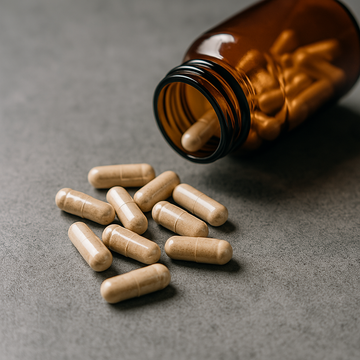
An overview of Turkesterone's properties and uses
Turkesterone is a phytoecdysteroid that occurs naturally in the plants Ajuga turkestanica and Rhaponticum carthamoides. It is believed to have a number of potential health benefits, including helping to increase muscle mass and strength, improve performance, and reduce inflammation.
Turkesterone is considered an adaptogen, which means it can help increase the body's resistance to stress and disease. It is also believed to have antioxidant properties and can help protect cells from damage caused by free radicals.
Although there are some preliminary studies suggesting that turkesterone has some immediate health benefits, more research is still needed in the field to establish its effects and safety. It is important to consult a doctor before taking turkesterone or other dietary supplements.
Turkesterone: chemical structure
Turkesterone is a natural steroid compound found in plants of the Ajuga turkestanica family. It is known for its potential anabolic and adaptogenic properties, and its pharmacological properties have been investigated in various studies.
Steroid classification
Turkesterone is a typical steroid compound that has a chemical structure similar to other steroids, such as testosterone and estrogen. It has a 17-keto group and a double bond in the A-ring, which is characteristic of most steroids. Turkesterone is classified as an ecdysteroid, which is a steroid compound found in insects and some plants.
Biochemical properties
Turkesterone has been shown to have a number of biochemical properties that can be beneficial to humans. It is believed to act as an adaptogen that can help the body adapt to stress and resist disease. It also has immediate anabolic properties that can increase muscle growth and strength.
Turkesterone has also been shown to have antioxidant properties that can help protect the body against harmful free radicals. Furthermore, it is also believed to have anti-inflammatory properties that can help reduce inflammation and pain in the body.
Overall, further research is still needed in the field to understand the full effects of turkesterone on human health and well-being.
Uses and research
Muscle growth and bodybuilding
Turkesterone has become popular among bodybuilders and fitness enthusiasts due to its potential ability to increase muscle mass and strength. Research has shown that Turkesterone can increase protein synthesis and improve nitrogen retention in the muscles, which can lead to increased muscle growth and better recovery after exercise.
In addition, Turkesterone can also help reduce muscle soreness and inflammation after exercise, which can lead to a faster recovery time and increased training capacity.
Potential health benefits
In addition to its potential benefits for muscle growth and bodybuilding, Turkesterone also has immediate health benefits. It is believed that Turkesterone can help regulate blood sugar levels and improve the lipid profile, which can be beneficial for people with diabetes and heart disease.
In addition, Turkesterone also has anti-inflammatory and antioxidant properties, which can protect against damage caused by free radicals as well as reduce the risk of chronic diseases.
Scientific studies
Although there is limited research on humans, animal studies and laboratory studies have shown promising results regarding Turkesterone's potential as a natural dietary supplement. Research has shown that Turkesterone can help increase muscle mass and strength, reduce inflammation, and improve the lipid profile.
In addition, Turkesterone has also been shown to have neuroprotective properties, whereby it can help improve memory and cognitive function.
Although more research on humans is needed, there is promising evidence for Turkesterone's potential as a natural dietary supplement that can improve muscle growth, health, and training performance.